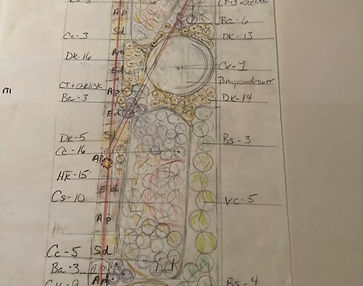
Design for Retirement Community Resident
This is a standard builders garden with virtually no plants. The owner tried various annuals and perennials without much success.
Currently there is no winter interest or structure to the space, making it look very forlorn for a good part of the year.
The new garden is designed to be attractive from all sides as the entrance has two paths. The design includes a full-size hydrangea which will provide light contrast against the dark siding, evergreens for year-round interest, and herbaceous perennials that repeat color at the entrance and to the beds extending out to face the road and driveway.


Small High Impact Garden and Adjacent Front Yard
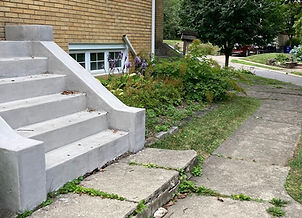
This family loves sitting on their side porch, but it doesn't provide for privacy.
Additionally the bed that buts up to the porch is both bare, after many planting failures, and “on top of” the neighbor's access yard and windows.
The design proposed adding some trellis work to the porch, planting low woodland plants under the evergreen trees, adding wood screens, in leu of fencing on the back corner of the porch, and wrapping plants around to connect with the mature arborvitae. The plan fills this small space with color and interest without disturbing the existing evergreens.
An additional inexpensive solution is to add a large baboo shade that can be lowered part way while sitting on the porch. These solutions allow for a view of plants, good air circulation, and privacy.
As the Garden wraps around to the front of the house the design recommendations include removal of the large overgrown arborvitae that blocks the front widows and encroaches on the side walk.
This provides and opportunity for cohesiveness with plants from the porch to beds opposite front entry.
Additionally, it allows for the planting of an ornamental deciduous tree that will provide shade for the south western exposure in summer and indoor light in winter.




Color and New Life for a Barren Front Yard
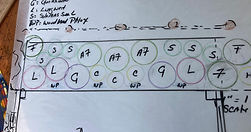
This young family wanted to replace a grassy and otherwise barren front yard with a garden filled with color and a designated area to play and relax.
The garden design is drenched with blocks of color, is pollinator friendly, and includes shrubs with persistent berries for color and birds.
The design includes a 12x12 foot spot for a swing, hammock, or table and chairs. It can be used in many ways as the family’s needs change. This area provides room for pots as does the spot close to the front entrance; the pots can house annuals to change out with the seasons.
A birdbath is tucked in between perennials and woody shrubs; this is an excellent low budget and low maintenance water feature for attracting birds and pollinators. Little things mean a lot.


A Backyard Garden for Play
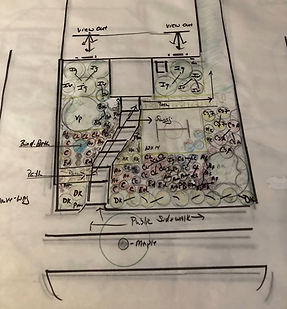
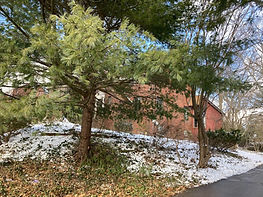
This growing family needed space for their children to play in the back yard. While it looks wide open in winter it was overgrown with thorny roses and herbaceous perennials.
Roses were relocated and the new design proposes a wide alley, for play, flanked by flower beds, and an adjacent square plot for more fun. The inner beds were cut back to first level walls and the ground was leveled out.
The hillside is designed with plants that compliment the existing serviceberry and pines. The hillside planting will act as a physical barrier to prevent or soften falls down to the paved driveway below.
Narrow evergreens and ferns are proposed to provide privacy on the patio that is now open to the neighbors. Beds are filled with low maintenance herbaceous perennials. There is also plenty of room to tuck in vegetables for the children to enjoy.


Redesign for an Overgrown Garden
This beautiful garden become very overgrown over a number of years and needed to be redesigned to make it manageable for the new owners.
Many of the existing woody plants needed to be removed and the only access from the back of the house to the front was a narrow uneven path.
The new design includes low maintenance plants for year-round interest. The side yard is opened up, the side path is widened, and a small stone patio is added as a lovely place to stop and enjoy the garden. Old and beautiful trees are enhanced by complimentary under planting.
The final design provides for good air flow, foot traffic, wheelbarrow access, and gives a feel and aesthetic of openness while still providing for privacy.
Opening the space makes it more welcoming and easier for the homeowner to manage. There is still plenty of plant life for pollinators and humans.



A Welcome Home Garden
This job was completed for a young couple with a growing family and an active life.
The Existing Garden
The existing garden was filled with shade loving plants which did not lend themselves to the sunny location.
Soil was compacted and the beds had a narrow strip of grass and block making it difficult to mow.
Plants were sparce and did not compliment the architecture of the home
Drawings and Planning
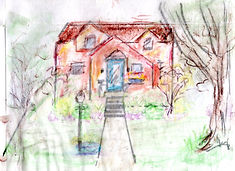
The homeowners wanted something that would be low maintenance but beautiful as they entered and exited their main entry .
The windows that flank the entry are high leaving a lot of bare wall to look at. This provided an opportunity to plant tall multi-stem plantings which would have covered the windows on a home with a standard window height.
The addition of trellises and the tall shrubs softens the walls and breaks up the monotony of having just one level of low shrubs only at the foundation.
Preparation
The old plants were removed but not wasted; they were relocated and what a difference being in the right location makes (see photo-right- of hosta and astible in new location)
Soil was amended to 12-18 inches with organic material to correct compaction, improve soil condition, and amended with nutrients per Penn State Soil Test recommendations.
Its Early Days - I'll repost next spring
It will take and another season for the foundation plants to grow in and the hydrangea and Viburnum to put on some height.
If money were no object larger plants could have been purchased. Having said that, sometimes smaller plants are a better optoion as they are easier to plant, establish roots quickly, and easily adapt to transplant.
In the meantime, the couple can still enjoy the scent of honeysuckle at their door and the nepeta, hardy geranium, and salvia flowers as they pass by. They will only need to deadhead a few times over the summer to promote more blooms.
A low bird bath blends in with the plants and provides both water and cover for birds. It is placed near the waterspout for ease of access and slightly shaded by the Viburnum; this will keep down algae in summer and make filling and cleaning a simple task.



A Public Garden Space
The Corson Hall site faced several challenges: compacted alkaline soil, electrical lines dividing the area, very low windows, strong northerly winds, heavy foot traffic near bicycle racks, occasional storm flooding, and significant snowfall.
A new design was required to effectively manage storm water run-off, support habitats for pollinators, and incorporate a diverse array of plantings with an emphasis on native species. Additionally, the space needed to serve as an educational resource for visitors and maintain visual appeal. Consideration was also given to ongoing site maintenance needs including accommodating snow removal during the winter months.
Concept
The design proposed a garden that met those criteria "From the Inside Out". It was designed with plants that met the site conditions (including a rain garden) and to be pleasing and educational for humans.
The initial concept progressed with plant selection, water for birds and insects, and defining spaces for people to enter the outside space or to enjoy the garden from inside their offices.
Flowering shrubs and herbaceous perennials will be in bloom from early spring through October. Trees and shrubs have fruits following flowers and a number have persistent fruits through winter. Birds will find cover in the form of evergreen shrubs if they need protection or a place to build a nest. The design incorporates a water feature for birds that is low to the ground; it will attract birds and provide beauty and birdwatching from the ground level windows in the east facing alcove.
Completed Design
The final plan included two rain gardens and two seating areas for respite and education.
Choosing plants with appropriate heights at maturity was vital to ensuring that views were not obstructed. A low water feature was placed in the alcove that is created by the tower and flanked by two long benches.
Mid-Garden Section
The design has many plants and varieties to accomplish canopy closure within one to two years.
There is diversity in genus to prevent disease and in general to provide year-round food for wildlife and to attract pollinators over a long season.
North Garden Section
Breakout of the North section of the garden provides detail of the seating area and water feature.
Placement of the benches draws the eyes away from the office windows to garden features beyond. If a visitor turns to the building, they will see a water feature as opposed to an office window while those inside can see movement and birds rather than bare ground or the back of bushes.
A strip of herbaceous perennials along the East edge of the garden gives some latitude for snow removal i.e., snow can be pushed onto the garden edges without harming the plants. The big blocks of color will attract pollinators, especially bees the rest of the year.
South Garden Section
The South end of the garden was planted to provide a shady spot to rest, meet a friend, have lunch at the outdoor table, or to just sit while finding keys for bikes.
Having a functional and comfortable spot to stop is another way to draw people in to enjoy and learn about the garden. It is a multi-purpose area at the corner of a busy pedestrian corner. A place for educational signage is designated, and it can also serve as a spot for impromptu outdoor education.